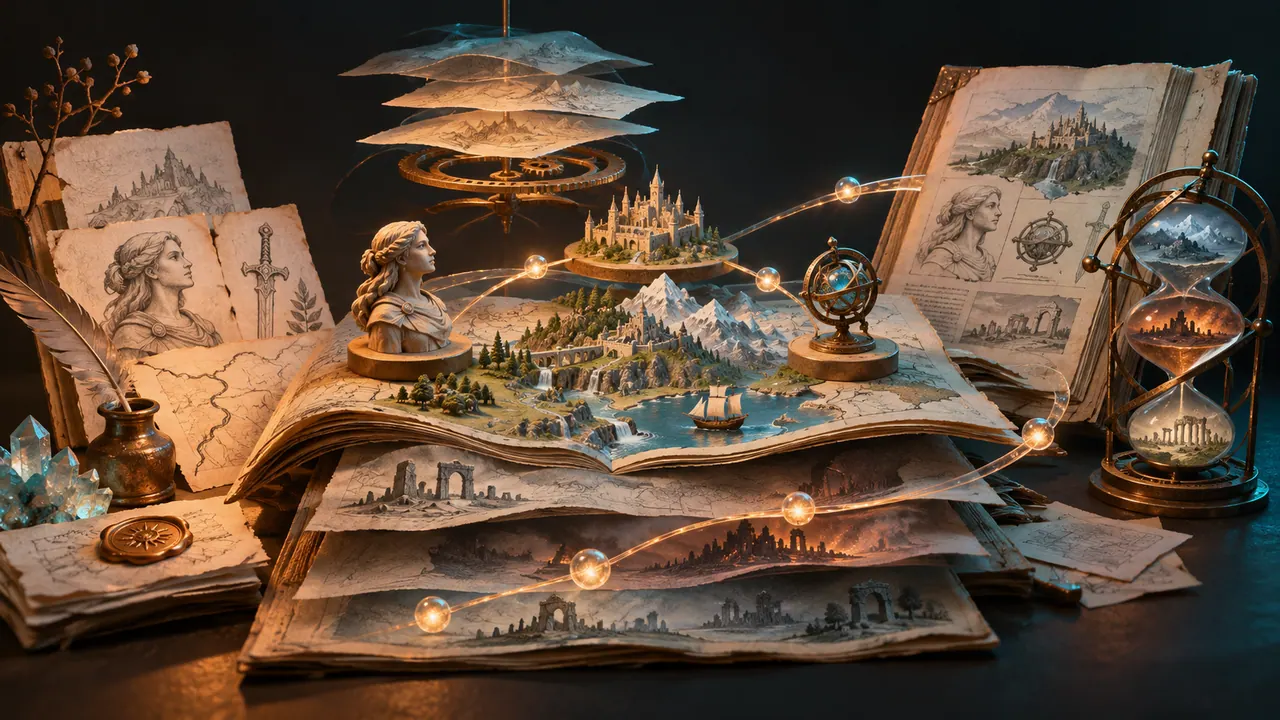
Story universe
Loremaker Universe
Created by Menelek Makonnen
An original universe explored through connected lore, characters, places and changing worlds.
Welcome to Loremaker
Somewhere in London, a young man is trying to prove he belongs among the people who hunt magic. In Accra, a masked inventor is turning the wealth that insulated her from corruption against the people responsible for it. Thousands of years earlier, a girl and an immortal swordsman are running from the destruction of her home.
Their stories are happening in the same universe. What survives one age can change the next. Loremaker is an original shared universe of superhero adventure, ancient fantasy, supernatural intrigue and cosmic science fiction, reaching from the kingdoms of Yankoponia to contemporary Britain and Ghana, hidden civilisations and places where reality itself is at stake.
A calabash can hold a home. Red lipstick can unlock a sorceress’s transformation. A camera can stop a person in their tracks. In a hidden civilisation, a person’s deepest ambition can become a living creature. Begin with the character who catches your attention; there is a larger world waiting behind them.
Start with a story
Novel
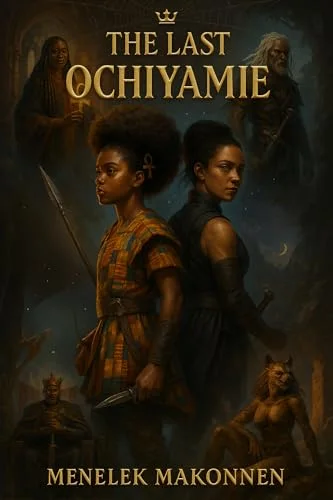
The Last Ochiyamie
Amenewa escapes the destruction of Asantara with the immortal warrior who promised her father he would protect her.
Read on Amazon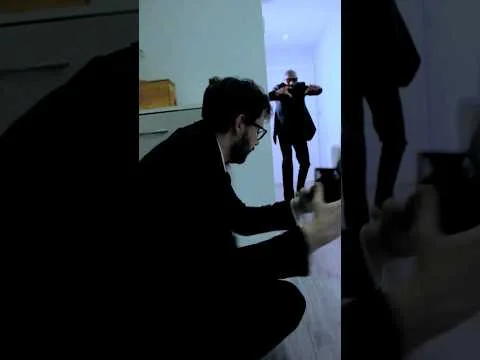
Proof of concept
Abranteers
Abranteers Hunt
A rookie Agent and a veteran Specialist confront supernatural dangers and the secrets that test their partnership.
Watch now
Proof of concept
Heroes & Gods
YouTube proof of concept
An influencer survives a late-night attack with something ancient inside her, and the danger reaches beyond her attackers.
Watch now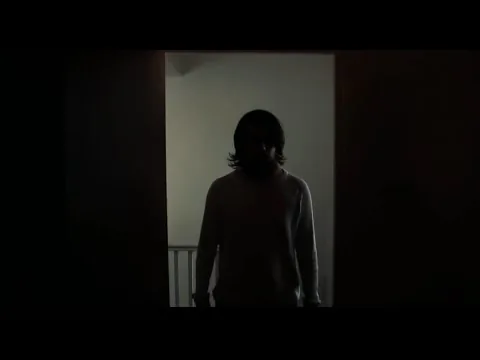
Proof of concept
Blinded by Magic
YouTube proof of concept
A photographer’s camera is transformed by a mysterious power, and the encounter costs him his sight.
Watch nowAbout the work
An original universe explored through connected lore, characters, places and changing worlds.
A linked encyclopedia/editorial prototype and 4D explorer organise interlinked universe entities and time-dependent events across scales and layers.
How I build the universe and Explorer
The build story 8 minute read

Loremaker Universe: Find the People, Places and Connections Behind a Large Story World
At a glance
- Purpose
- An original universe explored through connected lore, characters, places and changing worlds.
- The build
- A linked encyclopedia/editorial prototype and 4D explorer organise interlinked universe entities and time-dependent events across scales and layers.
In this story
By Menelek Makonnen
Loremaker Universe was built to help readers and creative collaborators find their way through a large fictional setting. Its encyclopedia links characters, factions, places, powers and eras; a separate immersive explorer offers a way to navigate scale and time. The purpose is to let someone follow a story-world question across the records it depends on.
A reader starts with a character, then needs a faction, an era and the place where two histories meet. A creator wants to check whether those relationships agree before adding another scene. A folder full of impressive lore can hold all the answers and still make finding one feel like a punishment devised by the universe itself.
The project is currently on a publication hold while canon is reconciled. The public output is an image-free coming-soon page. I am discussing the preserved encyclopedia, editorial experiments and 4D explorer as archived design and engineering work, not an active offer. That distinction matters: a fictional universe can survive impossible physics much more comfortably than two equally confident versions of the same person.
Follow a person into the places and relationships around them
The encyclopedia was built with React, TypeScript and Vite. Its typed entities cover characters, factions, locations, eras, powers, magic systems, races and items.
A character record can connect identity and aliases with places, groups, abilities, appearances and relationships. That structure matters because a story-world reference is rarely read in a straight line. Someone arrives looking for a person, then needs the era, the faction, a related figure and the place where their paths intersect.
The application’s directories and detail pages turn those joins into navigation. Character profiles combine identity, status, tagged information, related records and an artwork carousel. Timeline cards link an era to its characters and active factions, as well as a filtered directory view.
The underlying content path is local-first: bundled data initializes entity maps and an in-memory cache. That makes the reference experience self-contained, but it also places responsibility on the data revision supplied to it. A fast page cannot tell whether the source is the latest approved version merely because the import succeeded.
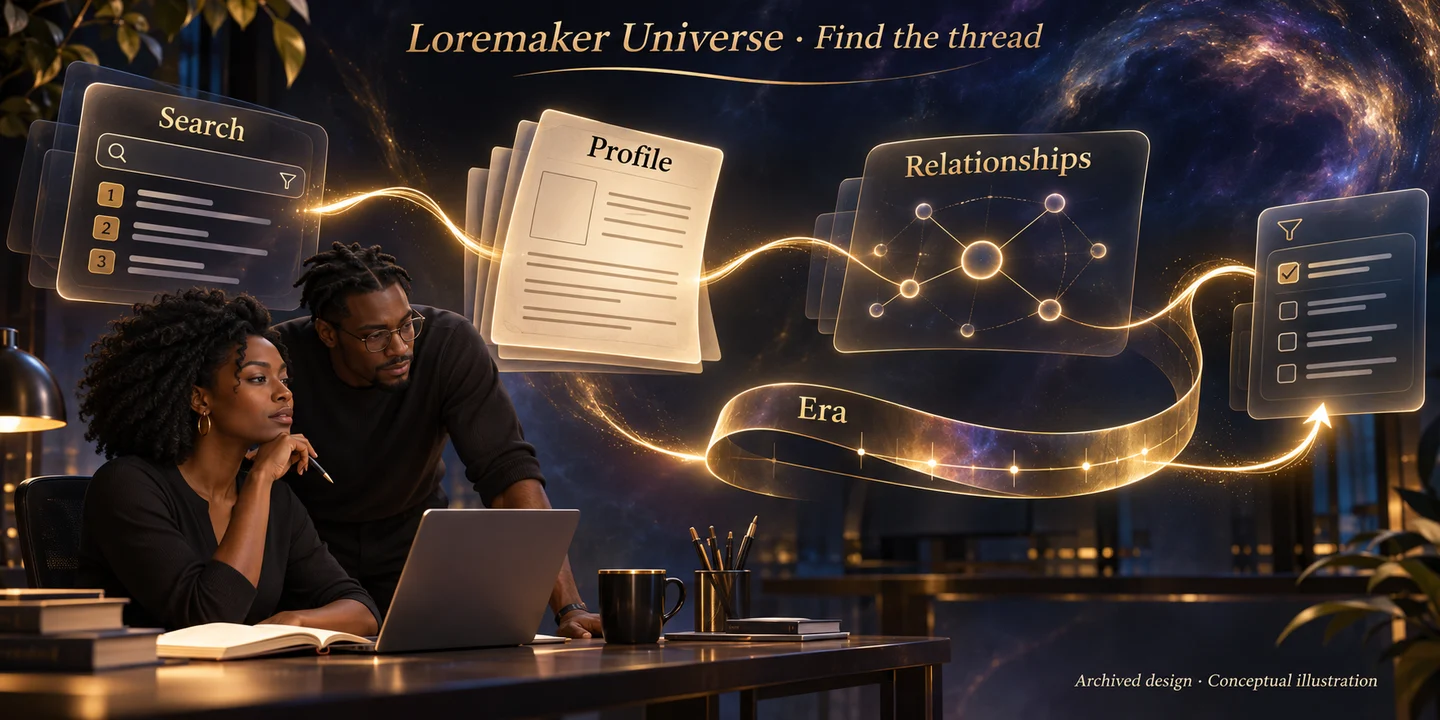
Find a known name or preserve a more complicated question
Global search ranks an exact name ahead of a prefix, substring, alias or description match. It waits for a short query, groups results by entity type and supports keyboard selection.
For the reader who knows a name, exact-match ranking shortens the route to the right record. For someone exploring a theme or relationship, grouped results offer a broader doorway. I wanted both behaviours because a reference library serves recognition as well as discovery; it should not force an expert to pretend they have never heard of the person they came to find.
The directory provides a different kind of discovery. It combines text with filters for alignment, faction, era, location, power, gender and status. Text remains required alongside the selected conditions, while those conditions can use ANY or ALL semantics.
The current search, filters and sort serialize into the URL. A filtered view can therefore be shared as a particular question about the world rather than a vague instruction to “look in Characters”.
I like that distinction. A creative reference tool becomes more useful when it can preserve the question someone asked, not only display an answer.
The local search cache also exposes a lesson for later development: rebuilding when the character count changes does not catch every in-place edit to a name or alias. Revision-aware invalidation belongs beside revision-aware canon.
Explore the connections when you do not know where to start
The relationship graph and hierarchy views offered a second route into the material. The graph could be searched, zoomed and expanded to full screen, while timeline and profile links kept the experience connected to the reference pages.
The visual system separated that work from the explorer. The wiki used dark nebula surfaces, glass-like cards, gold emphasis, Space Grotesk and Inter. A compass-like source mark gave the library an identifiable centre without requiring every page to become a spectacle.
Desktop navigation could collapse and remember its preference. On smaller screens it became a drawer with backdrop and dismissal behaviour. Character artwork had keyboard controls and a lightbox.
These are reading and inspection tools. The design goal was to make dense material approachable without pretending that visual drama is a substitute for finding the right record.
See how place and era change the visit
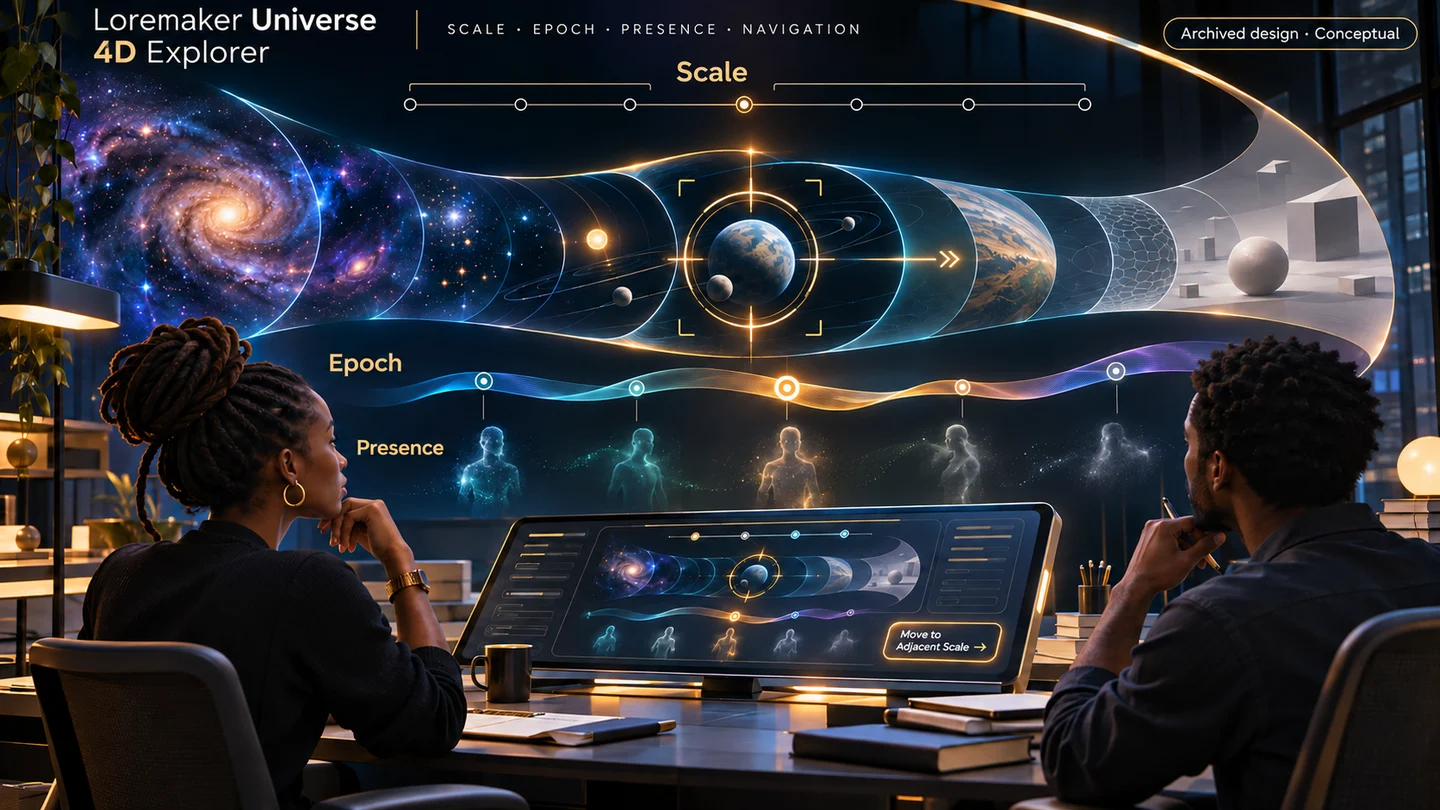
The separate 4D explorer used Three.js and WebGL with its own interface and rendering lifecycle.
Changing the epoch refreshed scene content such as cast, presence, events and billboards. The timeline was intended to change what was present, not simply repaint the date above an unchanged scene.
That distinction is important for a world with staged appearances. A location and an era are part of the meaning of an encounter. The explorer tried to make those dimensions navigable together.
Make entering and leaving the explorer predictable
The explorer had its own full-screen canvas, layer rail, timeline and slide-in Lore, Codex and Dossier panels. Mobile rules enlarged touch targets and expanded panels rather than merely squeezing the desktop layout into a narrower window.
The renderer included selectable quality, bloom and procedural ambient sound. WebGL unavailability produced a support message. Loading had progress handling and a safety timeout, while page-hide cleanup disposed listeners, timers and GPU resources.
Those choices address the experience around the scene.
The engineering lesson was that immersion includes the exits. A rich canvas needs predictable controls, a useful failure state and responsible cleanup just as much as it needs an attractive sky.
Review a proposed correction without pretending it is approved fact
The editorial experiments explored several distinct paths. A document-processing interface accepted supported file types, sent a file to a configured local helper and stored returned entity suggestions in browser-local state. Approving one of those suggestions changed its status; it did not apply a durable canon update.
Another consistency-check path could propose an edit for human confirmation and change the in-memory record for the session. A separate proposal lane required approved status before applying supported top-level updates, while creation remained unfinished.
These were useful workspaces for reviewing suggestions. They were not an autonomous canon-ingestion service or a database-backed publication system. Browser-local administrator flags also did not constitute server-verified authorisation.
The optional chat interface had a similarly specific context boundary. Its prompt included route, entity count and date, but did not retrieve the current detail record as grounded context. An in-world guide can sound knowledgeable without actually being connected to the fact under discussion.
That is a useful warning for any creative tool using models: persona and evidence are separate design jobs.
Why reconciling the source comes before reopening the experience
The current publication boundary withdraws the archive’s lore and images from the public output. The coming-soon build excludes those applications and assets while the source authority, identities, relationships and chronology are reconciled.
The repair direction is to establish a versioned controlling source, preserve explicit open questions and feed every experience from the same approved revision. Replacement artwork needs its own visual review. Reopening the library and explorer is therefore a coordinated content-and-product milestone.
This project also remains separate from Loremaker Pro. They share a broader world-building interest, but this encyclopedia and archived explorer should not borrow another project’s version number, release status or authority.
I do not want a reader to mistake an archived package illustration for an invitation to use an active service. The current public surface is the holding page; the larger work remains a design and engineering case study.
What this archived work still teaches me
The strongest ideas survive that boundary. Typed relationships, ranked search, shareable filters and timeline links give a large body of creative material navigable structure. Scale and epoch controls offer a different way to understand presence and change. Review surfaces make it possible to discuss a proposed correction before treating it as fact.
The deeper lesson is about agreement. A wiki, a graph and a cinematic explorer can each be beautifully implemented while disagreeing about the same person. Regenerating all three from one approved revision is more valuable than polishing them independently.
The lesson is useful in work beyond fiction too. A product catalogue, knowledge library or planning tool can provide several beautiful views of the same records. Its users need those views to agree. This project sharpened how I think about typed relationships, discoverable information and the source authority that has to hold them together.
Make the answer easier to find, then make sure it agrees
The archived Loremaker Universe work shows how I approach a dense body of information: give it typed relationships, several sensible ways to search and a journey through place and time. The reader should be able to follow a question without already knowing the entire setting.
Reopening it depends on a shared approved source and reviewed art, not another coat of nebula paint. That is the next useful chapter. The universe can keep its impossible physics; the library, graph and explorer should at least be able to agree about who is standing in it.
Back to the story’s beginning ↑