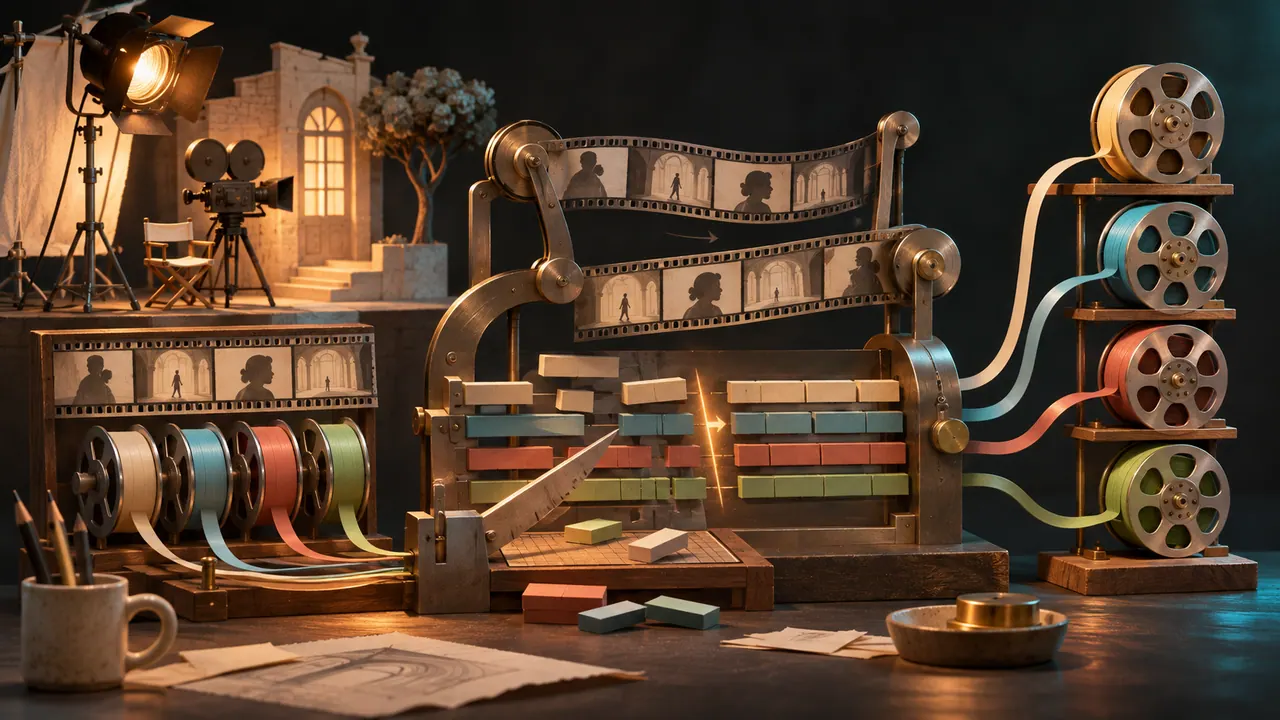
 Software
Soundr
Creative Tools · ICUNI Labs
Exploring film sound as a story-linked craft with clear decisions and deliverables.
The build story 8 minute read

Soundr: Keep the Dialogue Working When the Film Changes
At a glance
- Purpose
- Exploring film sound as a story-linked craft with clear decisions and deliverables.
- The build
- Story-linked takes and sample-based editing connect sound decisions to picture reconform. Master, dialogue, music and effects delivery remain separate outputs in this local prototype.
In this story
By Menelek Makonnen · ICUNI Labs
Soundr helps filmmakers edit dialogue, compare performances and keep their sound connected to the film as the picture changes.It brings local audio, picture proxies, alternate takes, mixing and delivery into one workstation workspace within Orama, my filmmaking suite's working name.
A new cut should invite a fresh listen, not a forensic search for the breath that now belongs to a character who left the room twenty seconds ago. Technically the audio still plays. Dramatically, I have accidentally opened a haunting consultancy.
I built Soundr around the decisions behind the sound. Which performance did I choose? Which shot does this cue belong to? When the scene gets shorter, should the sound follow, stay or wait for me to decide?
That makes it relevant to short films, animation and developing narrative work where voices and picture evolve together. It is a bounded workspace for short sessions and supported 48-kHz WAV audio, rather than a claim that I have personally replaced an entire post-production industry before lunch.
Begin before there is a final picture
A session can start with early voices. That matters when an animation, short scene or animatic is still finding its shape. I can organise dialogue and alternate performances without waiting for a mythical final cut to descend from the mountain carrying approved timecode.
Soundr imports local WAV audio and supports picture proxies within its current scope. It records source information, waveform peaks and content hashes, while keeping source-in and timeline placement explicit. The recording remains separate from the clip that uses it. Trimming a clip therefore changes an editorial decision, rather than taking a knife to the original performance.
Story snapshots from Screenwritr and Storytellr can bring stable scene and shot identities into the session. Those identities give dialogue and cues something more durable to refer to than the current screen position. The workflow is an explicit snapshot import: I bring in the story state I intend to use, then work against it.
For an animated short, that can mean linking early performances to the planned shots. For a filmed scene, it can mean comparing takes while the cut develops. For a short narrative pitch, it gives the voice and picture a shared structure before the sound has become a pile of files called “better_take_3_really”.
The useful ambition is continuity of decisions. When a shot moves, I want to know which sounds were attached to it and which were deliberately placed independently.
A performance deserves an explicit choice
Alternate takes are where that distinction becomes practical. Importing a replacement creates another aligned option. Selecting it is a separate action. A file arriving in the session should not silently become the performance everyone is now hearing.
Changing the selected take also clears the relevant cue approval. That is intentional. The earlier approval belonged to a particular performance, against particular picture, in a particular revision. Once that changes, the review needs to happen again. An approval tick should have a memory longer than a goldfish with administrator privileges.
The timeline supports movement, trim, slip, split and duplication while retaining the original source. Ordinary movement can snap to picture frames; finer sample precision is available when the edit requires it. Gain and fades help shape the transition, and track and take state decide what contributes to the mix.
For dialogue, this provides a concrete working loop: inspect the line, compare the options, select the performance, adjust the placement, listen against picture and record the review. The interface serves the decision rather than replacing it with a confident waveform.
I like building that kind of loop because it makes the product's judgement visible. The software knows when a choice changed. The human still knows whether the choice is good.
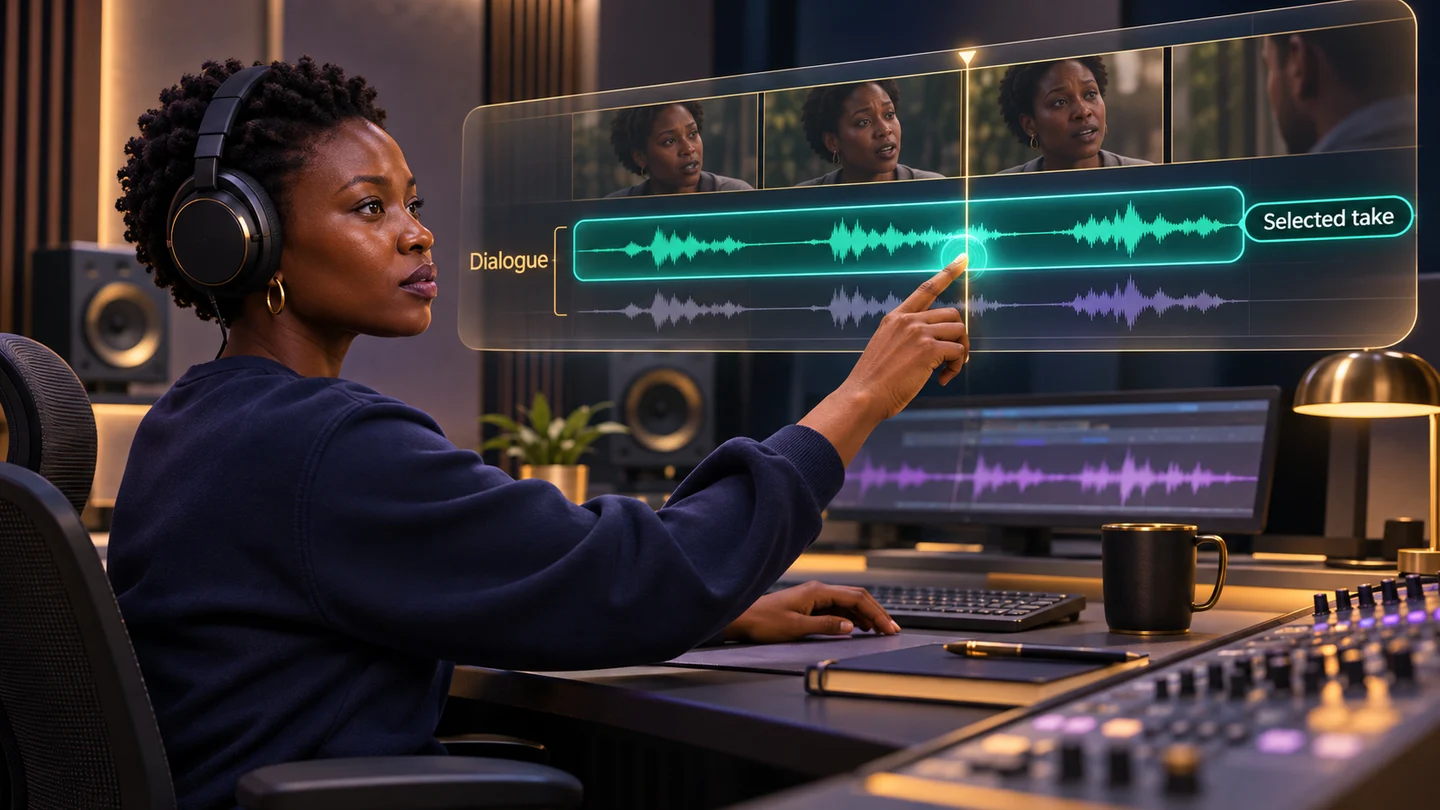
Dialogue editing and takes: keep the recording intact, choose the performance and review the result.
Make the new cut explain itself
Picture reconform is Soundr's most distinctive workflow. A new cut arrives with an explicit shot map. The system compares stable shot identities and works out what moved, shortened or disappeared.
Some changes are straightforward. A sound attached to a shot can follow that shot when the mapping is unambiguous. Other changes need a decision. If a shot disappears, should its sound be parked or remain at its absolute position? If a sound spans a changed boundary, should it follow, extend where source material permits or wait for a different edit?
I built those ambiguities into the plan. The software previews the change and presents the choices before applying it. The director or editor can audition the proposal, resolve the outstanding questions and then commit the revised session. A preview is useful precisely because it can be rejected without having already rearranged the mix.
The plan is tied to the base project. If another edit changes that project, the old plan needs another preview. That protects against applying a perfectly calculated answer to a question the session is no longer asking.
Imagine shortening an interview shot while a line bridges into the next image. Simply dragging every sound by the same amount can preserve arithmetic and destroy intention. A reviewed plan exposes the bridge, the available source and the competing choices. I can keep the performance where it belongs instead of asking a blanket offset to develop an ear.
Approvals reset after the accepted picture change. That can feel strict, but a changed context deserves a fresh listen. The new picture may be shorter; the consequences are rarely so considerate.
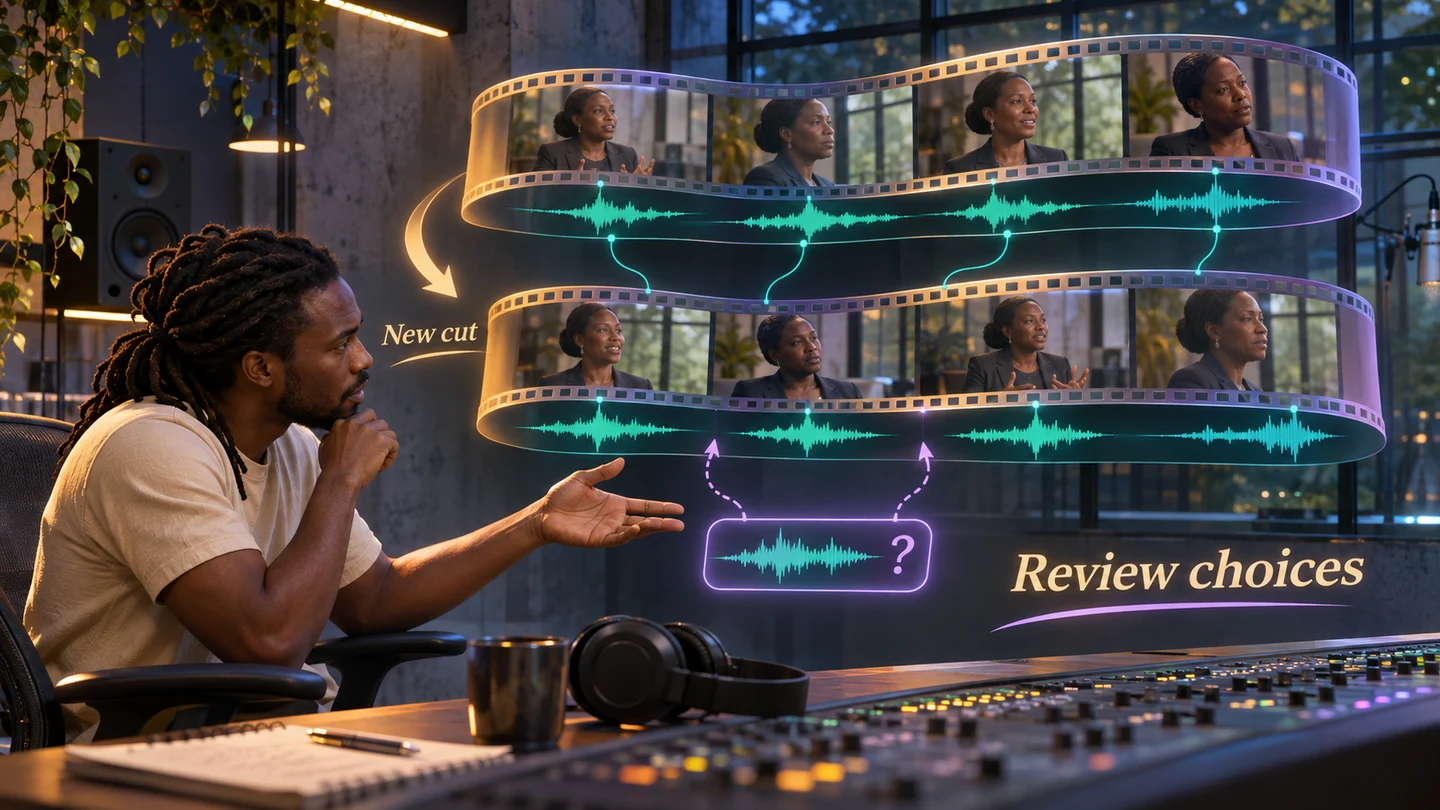
Reviewed reconform: compare the new picture, inspect linked audio and resolve ambiguous changes before applying them.
A common clock for picture and sound
A dialogue edit needs to land where I heard it, including when the picture uses a different kind of clock. Soundr keeps audio positions as integer samples at 48 kHz and represents frame rates as rational values. That gives sound and picture a defined relationship when I trim a syllable or move a cue against a frame.
The point is practical. A clip's source offset, the picture's start and the timeline's origin are different values. Keeping them explicit lets the application validate their relationship, rather than hoping every imported file begins at the same imaginary zero.
Playback uses a prepared audio mix and an audio-led browser clock, with video adjustment and timing observations to manage picture drift. For the editor, that means listening and viewing are connected to the same defined project timing. Physical speaker and display calibration remains a separate matter.
This is the sort of implementation detail I enjoy when it removes a creative uncertainty. The editor should spend time deciding where the breath belongs. The clock should be able to count.
Mix with a route you can explain
Soundr has its own audio evaluator. It follows the routing graph, selects the enabled takes and applies source offsets, fades, clip gain, track and bus controls, supported processing and automation. Dialogue, ambience, effects and music have a defined place in the session, with category buses and a master.
That separation is useful when a scene needs a different balance. A music adjustment can happen at its own stage. A dialogue choice remains a dialogue choice. Automation can operate in sample time or retain a relationship to a cue, which matters when the picture changes around it.
The graph is also a contract. A routing cycle prevents rendering, because a contradictory route needs an explicit correction. I would rather expose a loop than allow the mix to become an experimental feedback installation without anyone ordering one.
Delivery produces synchronized master, dialogue, music and effects WAVs within the workspace's supported format. The render works from frozen project state, verifies required source media and records output hashes in a delivery manifest. That manifest also describes the picture, range, processing and included material.
For someone receiving the files, this creates a useful answer to “which version is this?” The answer can point to a defined project and picture revision. Category stems tap before master processing, so their relationship to a processed master remains explicit too.
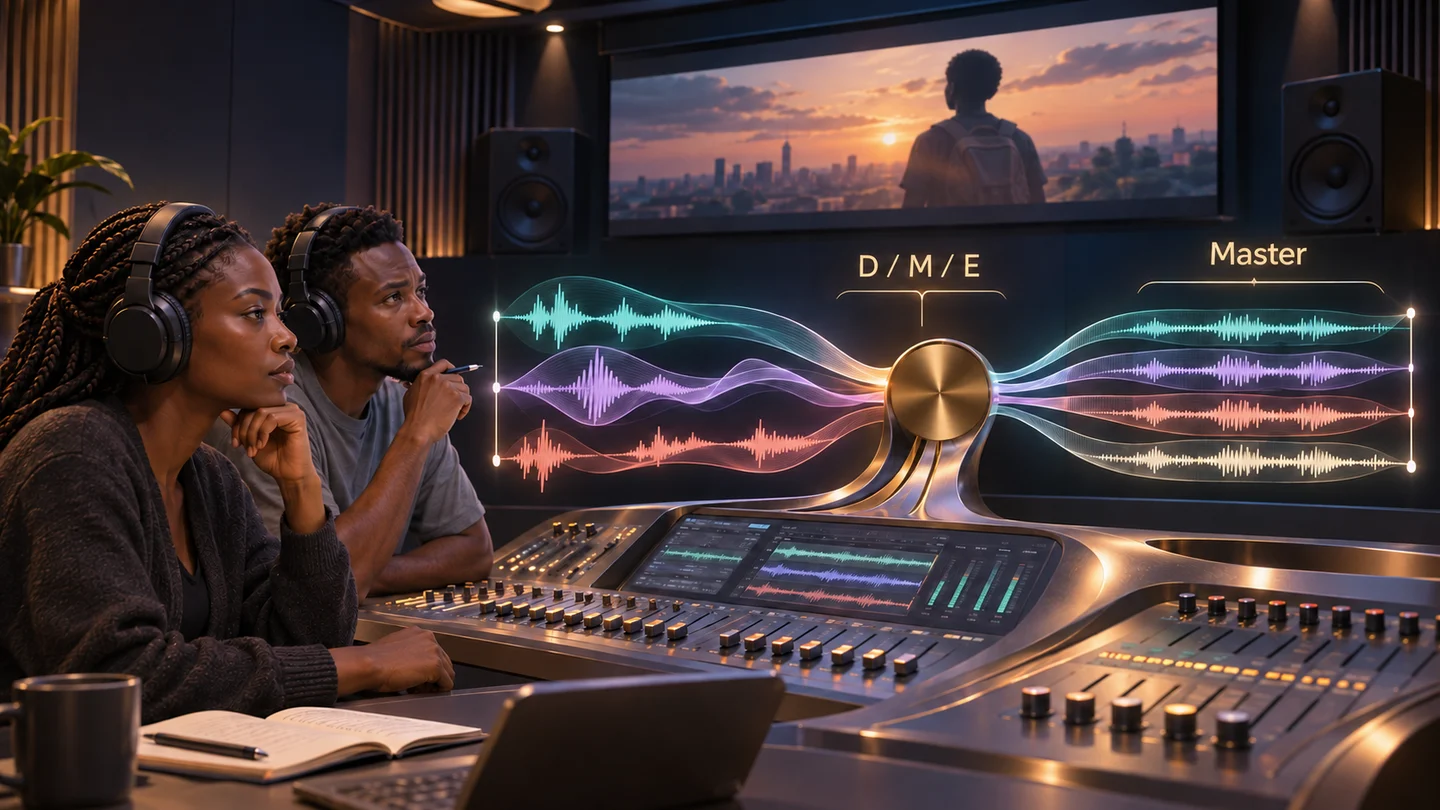
Mix and delivery: evaluate the selected material, listen against picture and retain a manifest for the resulting files.
The engineering should protect the ear
I built the workstation with JavaScript modules, a browser interface, a local Node HTTP service, Zod validation and worker-thread rendering. Whether an edit comes from the interface or MCP, it identifies the same project and expected revision. That matters when I return to a session: a stale request should not quietly become the newest creative decision.
Saved versions are named checkpoints. That gives experimentation a route back without turning history into a crime scene.
REAPER is a functional reference for the product research; Soundr uses its own project model and evaluator. The current runtime also developed beyond the historical v0.1 schema designs. I keep that distinction clear because a design document is a useful beginning, while working session rules have to carry the consequences.
The main lesson is that story awareness needs more than a field labelled “scene”. It needs stable identities, defined timing, explicit take choices, approval invalidation and a plan for picture change. I built those mechanisms together because each one preserves a different piece of editorial intent.
Keep the breath with the living
Soundr is for the part of filmmaking where a performance matters more than a waveform looking impressively busy. I can compare the line, choose the take, hear it against picture, review the consequences of a new cut and prepare aligned audio outputs with a record of their version.
Building it taught me to connect story awareness to real editing rules: stable shot identities, precise timing and fresh review when the context changes. A field labelled “scene” would have been easier. It would also have been mostly decorative optimism.
Picture lock may arrive with another attachment tomorrow. I would like the sound editor to receive a plan, rather than an exorcism request.
Back to the story’s beginning ↑
About the work
Exploring film sound as a story-linked craft with clear decisions and deliverables.
A local film-audio prototype with story-linked takes, sample-based editing, picture reconform and separate master, dialogue, music and effects delivery.
Design and technical decisions
Story-linked takes and sample-based editing connect sound decisions to picture reconform. Master, dialogue, music and effects delivery remain separate outputs in this local prototype.
Connected work

Software
Orchestra
A production control room for the long journey between an idea and a prepared release.

Software
Screenwritr
A writing workstation where scenes, story-world entities and drafts stay connected.
Software
Storytellr
Turning a screenplay into a space where shots, cameras and timing can be explored.